
Meta Glasses at Work: What Employers Need to Know
What are they, how do you recognise them, what are the risks of an employee wearing them at work and can an employer ban them?
Meta Glasses are a really topical issue for employers, particularly in customer-facing businesses, healthcare, manufacturing, finance and any workplace where confidential information is handled.
What Are Meta Glasses?
“Meta Glasses” generally refers to the Meta Ray-Ban Smart Glasses, developed jointly by Meta and Ray-Ban. They look remarkably like ordinary designer glasses but contain:
- A built-in camera.
- Microphones.
- Speakers.
- AI voice assistant (“Hey Meta…”).
- Bluetooth connection to a smartphone.
- The ability to take photographs and record videos hands-free.
- Live streaming to social media.
- Phone calls and music.
Unlike Google Glass (which looked obviously technological), these are deliberately designed to be almost indistinguishable from normal glasses.
How Do You Recognise Them?
There are several clues, although they’re subtle.
1. Cameras
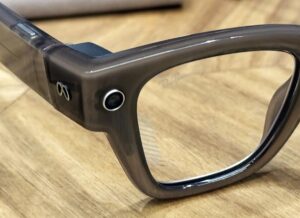
The most obvious giveaway is a tiny camera lens in the corner of one lens frame.
It’s only a few millimetres across.
2. LED Recording Light
Whenever the camera is recording, a small white LED on the front of the glasses illuminates.
Meta designed this as a privacy feature so people know recording is taking place.
However:
- it isn’t especially bright in daylight;
- people often don’t notice it;
- it can be obscured by stickers, dirt or the wearer’s hand (although deliberately disabling it may breach Meta’s terms of use).
3. Thicker Arms
The side arms are chunkier than normal Ray-Bans because they contain:
- batteries;
- speakers;
- processors.
4. Charging Case
The case is much larger than a normal glasses case because it charges the glasses.
Why Are Employers Concerned?
The biggest issue isn’t that they’re glasses.
It’s that they’re effectively a wearable smartphone camera.
An employee could potentially:
- photograph confidential paperwork;
- record meetings;
- capture conversations;
- livestream from the workplace;
- record disciplinary meetings;
- photograph computer screens;
- photograph customers or clients;
- record colleagues without their knowledge.
Unlike taking a phone out, recording can happen very discreetly.
Which Businesses Are Most at Risk?
Although any employer could encounter issues, the risks are particularly significant where employees have access to:
- confidential client information;
- financial records;
- medical information;
- HR files;
- commercially sensitive information;
- manufacturing processes;
- customer homes.
Employment Law Risks
There are several.
Confidential Information
Employees may accidentally or deliberately capture:
- client details;
- pricing;
- payroll data;
- financial records;
- HR information;
- commercial secrets.
Data Leakage
Because the glasses sync directly with Meta’s cloud apps via mobile phones, employees filming a workspace could accidentally upload proprietary code, intellectual property, or confidential client data to third-party servers.
GDPR And Data Protection
Video recordings containing identifiable individuals are personal data.
An employer processing personal data has obligations under the UK GDPR and Data Protection Act 2018.
Unauthorised recordings could expose the employer to complaints or regulatory issues.
Privacy
Employees have a reasonable expectation that:
- toilets,
- changing rooms,
- welfare areas,
will never be recorded.
Many employers already prohibit any cameras in these locations.
The tiny LED recording light on the front frame can easily be covered, masked, or ignored in well-lit office environments, making it easier for recordings to go unnoticed and increasing the potential privacy risks.
Health And Safety
In some workplaces smart glasses may:
- distract the wearer;
- reduce concentration;
- create hazards around machinery;
- interfere with PPE.
Trust And Employee Relations
Knowing colleagues may secretly record conversations can significantly undermine trust within a workforce.
Can An Employer Ban Meta Glasses?
In most cases, yes. Employers can prohibit employees from wearing meta glasses with recording capabilities where this is necessary to protect confidential information, customers, staff privacy or business security. However, any ban should be reasonable, clearly communicated and applied consistently.
Many organisations already prohibit:
- mobile phones;
- cameras;
- USB devices;
- wearable recording devices.
Meta glasses naturally fall within the same category.
Before introducing a ban, employers should consider the following:
1. Make sure your policy is clear
Don’t rely on telling employees verbally. If smart glasses are prohibited, this should be included in your employee handbook, IT policy or Bring Your Own Device (BYOD) policy so everyone understands the rules.
2. Consider reasonable adjustments
Some smart glasses may include prescription lenses or accessibility features to assist employees with disabilities. Before refusing their use, consider whether reasonable adjustments are required under the Equality Act 2010.
3. Avoid overreacting
There’s a difference between an employee who accidentally walks into a meeting wearing smart glasses and someone who deliberately records confidential conversations. Investigate the circumstances before deciding whether disciplinary action is appropriate.
4. Don’t introduce excessive monitoring
If you’re considering monitoring employees to detect unauthorised recording, remember that workplace monitoring must be necessary, proportionate and comply with UK data protection law.
5. Train your managers
Most people wouldn’t recognise Meta Glasses if they saw them. Managers should understand what they look like, the risks they present and how to deal with concerns appropriately.
What About Prescription Glasses?
You cannot simply ban prescription glasses. Instead, the policy should distinguish between:
- ordinary prescription glasses; and
- smart glasses with recording or AI capability.
An employer could require employees to wear conventional prescription glasses during working hours instead.
Free Download: Smart Glasses & AI Wearables Handbook Update
Need wording for your handbook? Download our free Smart Glasses & AI Wearables Handbook Update Pack.
What If An Employee Says They Won’t Record?
That doesn’t necessarily matter.
The issue is the capability.
An employer isn’t obliged to wait until confidential information is actually recorded before taking action.
The same reasoning applies to banning camera phones in secure environments.
Can You Discipline Someone?
Potentially, yes.
Depending on the circumstances:
- wearing prohibited smart glasses after instruction not to could amount to misconduct;
- secretly recording meetings could amount to misconduct or, in serious cases, gross misconduct;
- recording confidential information could justify dismissal;
- publishing recordings online would almost certainly aggravate the situation.
As always, any disciplinary action should follow a fair investigation and procedure.
Top Tip: The UK Information Commissioner’s Office (ICO) initiated a formal enquiry after discovering that contractors were reviewing private video clips from smart glasses, highlighting the importance of considering GDPR and privacy obligations when introducing or managing smart recording devices in the workplace. This investigation underscores that using recording technology in a workplace environment can breach data protection regulations, especially when AI processes the footage for external review. For a full breakdown of the regulatory implications, see the official statement from the ICO.
What Should Employers Do Now?
Check Whether Your Existing Handbook Mentions Wearable Technology Or Recording Devices.
Many employee handbooks already contain policies on mobile phones, cameras, confidentiality, IT usage and data protection. However, if your handbook hasn’t been updated recently, it’s unlikely to mention AI-powered wearables such as Meta Glasses or other smart devices with recording capabilities.
Review your existing policies to make sure they clearly explain whether wearable recording devices are permitted, where they may be used, and the standards expected of employees. You should also ensure your disciplinary rules make it clear that unauthorised recording, sharing confidential information or breaching company policies may result in disciplinary action.
Carry Out A Risk Assessment For Areas Where Confidential Information Is Handled.
Not every workplace presents the same level of risk. Consider where employees could access confidential information or where recording could compromise privacy, security or commercial interests.
For example, HR offices, finance departments, meeting rooms, healthcare settings, production areas and customer premises may all require additional safeguards. Think about whether existing controls are sufficient or whether restrictions on wearable recording devices are appropriate in certain areas. Recording your assessment will help demonstrate that any measures you introduce are reasonable, proportionate and based on genuine business needs.
Train Managers On How To Deal With Employees Wearing Smart Glasses.
A policy is only effective if managers understand how to apply it consistently. Many people would struggle to distinguish Meta Glasses from an ordinary pair of prescription glasses, so managers should understand what the devices look like, the risks they present and when they should intervene.
Training should also cover how to approach employees professionally, how to investigate concerns without making assumptions, and when an issue should be dealt with informally or through the disciplinary procedure. A calm, consistent approach will help protect both the business and employees while reducing the risk of misunderstandings or unfair treatment.
Update Your Handbook And Disciplinary Rules Before The Issue Arises.
Absolutely. Most handbooks written more than a couple of years ago won’t mention AI wearables.
I’d recommend updating:
- Mobile Phone Policy
- IT & Communications Policy
- Confidentiality Policy
- Data Protection Policy
- CCTV/Recording Policy (if applicable)
- Disciplinary Rules
- AI Policy (particularly if you already have one)
Free Download: Smart Glasses & AI Wearables Employer Compliance Pack
Download a free model handbook clause together with practical guidance on managing Meta Glasses and other AI-powered wearables in the workplace.
The pack includes:
- Model employee handbook wording
- Three disciplinary scenarios
- Manager guidance
- Five compliance questions to consider before allowing wearable AI devices at work
Practical HR Advice, Straight to Your Inbox
Employment law updates, useful HR guidance and practical tips for managing people in small businesses.
Join the Kea Mailing List →

